Research Projects
The following section provides an overview of my current and recent research projects, outlining their thematic focus, institutional contexts, and funding frameworks.
Fūdo and Nature Alliance – Interdisciplinary Perspectives on a Sociology of Collaborative Nature Relations in German-Japanese Dialogue
Project Duration: April 2026 – March 2027 · Host Institution: Institute for Research in Humanities, Kyoto University · Funded by JSPS in cooperation with the Alexander von Humboldt Foundation
In the context of ecological crises, understanding human–nature relations has become a key concern in social theory. This project develops a sociology of collaborative nature relations that makes the role of non-human actors in social processes more explicit. It starts from the premise that nature is not merely an object of human action, but an active and constitutive element of social, cultural, and spiritual life. The project aims to move beyond the Western nature–culture divide by comparing two underexplored concepts: Naturallianz (Ernst Bloch, Ludwig Fischer) and Fūdo (Watsuji Tetsurō, Imanishi Kinji). Both understand agency and subjectivity as relational and cooperative. Building on this, the project develops a heuristic framework to analyze collaborative nature relations across different social contexts in an interdisciplinary and intercultural way. It contributes both theoretically and conceptually: by clarifying how nature participates in social reproduction, and by advancing a broader concept of society in which human and non-human actors are understood as co-constitutive and cooperative.


The Relational Quality of the Material World: Perspectives of a world-relational sociological analysis of materiality
Dissertation · Project Duration: April 2019 – June 2023 · Host Institution: Max Weber Centre for Advanced Cultural and Social Studies, University of Erfurt
Objects shape relationships—this insight is hardly new since the rise of Actor–Network Theory and so-called New Materialism in the social sciences. Surprisingly, however, little attention has been paid to how objects influence relationships and what kinds of relational qualities material engagements can take. My completed doctoral project addressed precisely these questions.
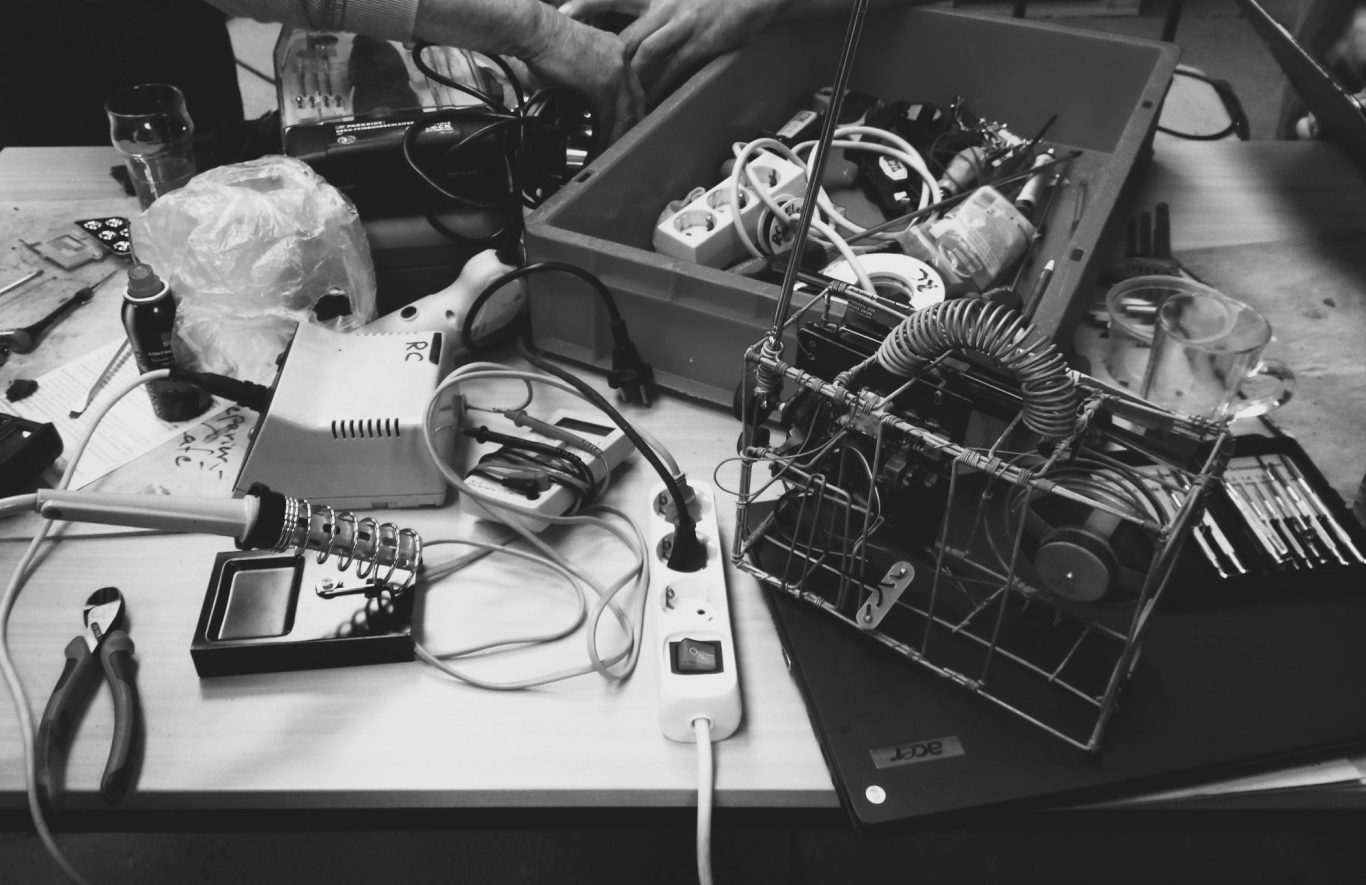
Starting from the premise that objects are both products and producers of world relations, the project advances and methodologically refines a sociology of world relations grounded in materiality. It is based on more than 22 case studies—so-called phenopraxes—in which selected objects such as discount furniture, broken radios, fungal materials, or nuclear waste were examined in interaction with an expert, allowing their specific relational qualities to emerge in practice. The method of phenopraxis developed in this context triangulates phenomenological research in sociology and extends it through a dynamic, experience- and problem-centered perspective. Only by accounting for this experiential dimension was it possible to describe the phenomenon in its full range and social relevance.
Through the phenomenological analysis of these cases, the project develops a differentiated conceptual framework that enables a consistent description of both the relational qualities of individual objects and those of broader segments of the world. Its key contribution lies in combining maximal inclusivity of empirical examples with a systematic differentiation based on relational quality. Where previously only speculative claims were possible, a nuanced analytical approach is now available—and remains necessary. The findings show clearly that processes such as sustainability or digitalization do not produce purely resonant or alienating relations. Rather, they must be understood as transformations of relational quality—transformations that need to be shaped so that sustainability generates resonance and resonance itself becomes sustainable. With the completion of the doctoral project, the work is therefore not finished; rather, it has articulated both the central societal challenge and a conceptual means of addressing it.